TMS vs Antidepressants A Guide to Side Effects Response and Cost
Dealing with depression is incredibly difficult. You want to feel better but finding the right treatment path can feel overwhelming. Many people start their healing journey with daily medication. Sometimes those pills work perfectly and restore your energy. Other times they cause frustrating side effects or simply stop working. Finding the right treatment is not a path you must chose alone and the best fit for your mental health is out there.
According to the Centers for Disease Control and Prevention many adults experience depression and need to explore other options when standard treatments fail. One of the most effective alternatives is Transcranial Magnetic Stimulation. Let us compare TMS vs antidepressants so you can make an informed decision for your health and your future.
Understanding Your Treatment Options
It helps to know exactly how these two approaches work in your body. They both aim to relieve depression but they do it in completely different ways.
The Role of Antidepressant Medication
Doctors often prescribe pills first. These drugs alter brain chemicals to boost your mood over time. They are easy to take at home. You just swallow a pill every day. But finding the right drug often takes months of trial and error. You might try one pill and wait six weeks just to find out it does not help at all. Then your doctor switches you to another pill. This waiting game is exhausting when you just want to feel better now. The Substance Abuse and Mental Health Services Administration notes that finding effective treatment often requires adjusting plans over time.
The Role of NeuroStar TMS Therapy
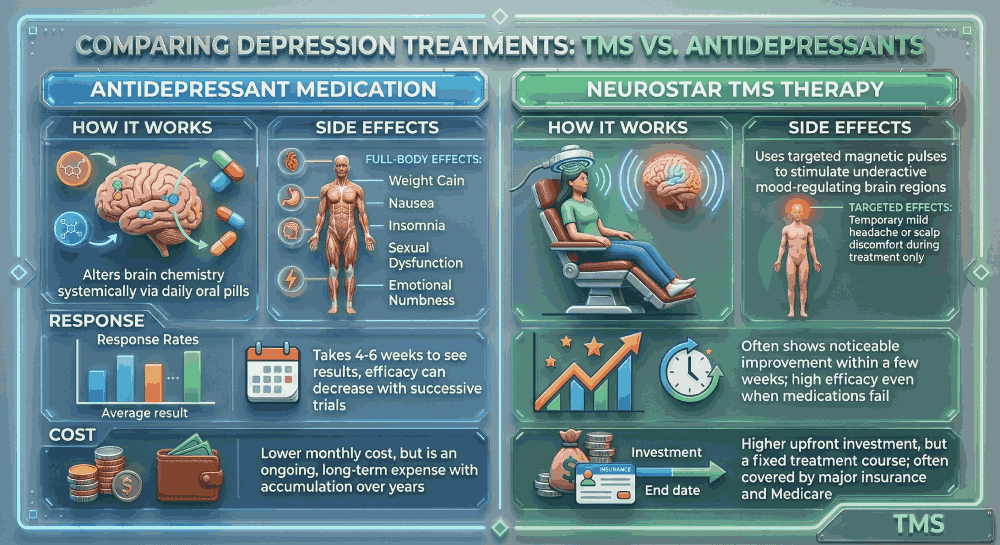
TMS is entirely different. It uses gentle magnetic pulses to wake up the parts of your brain that control mood. We offer NeuroStar TMS therapy right here in our office. You stay awake and relax in a comfortable chair. You can read a book or watch a show while the machine makes a gentle tapping sound. There is no surgery and no daily pill to remember. If you want to know more about the science behind these magnetic pulses you can explore how NeuroStar works to help your brain heal naturally.
Side Effects TMS vs Antidepressants
This is where the two treatments look very different. The way a treatment enters your body completely changes the side effects you might feel.
Antidepressant medications go through your whole body. Because they travel through your digestive system and blood they can cause widespread issues. Common side effects include weight gain upset stomach sleep problems and a lowered sex drive. Many people feel foggy or emotionally numb. Some people even stop taking their medication because these physical changes become too much to handle.
TMS targets one specific area of your brain. The magnetic pulses do not travel through your stomach or your blood. The Food and Drug Administration cleared NeuroStar TMS as a safe option precisely because it avoids those full body side effects. You can read more about NeuroStar safety and proven results to feel confident in your choice. The most common side effect is a mild headache or scalp discomfort during the first few sessions. This usually goes away quickly. You can even drive yourself home right after your appointment and go back to work.
Response Rates Which Works Better
When you invest your time and energy into getting better you want to know the treatment will actually work.
When you take a pill you might wait four to six weeks to feel any different. If the first pill fails the chances of the second or third pill working drop significantly. The National Institute of Mental Health reports that many patients do not reach full remission with just medication.
TMS offers incredible hope when medications fall short. Many people see a real difference after just a few weeks of treatment. For patients who have not found relief with pills NeuroStar TMS shows excellent results. Exploring functional psychiatry can also help you look at your overall brain health alongside these treatments to maximize your healing.
After completing your initial sessions you might wonder about the future. We guide you through TMS maintenance so you stay feeling well long after your first round ends.
Who is a Good Candidate for Transcranial Magnetic Stimulation
Not everyone needs TMS right away. If you are trying your very first antidepressant it might work perfectly for you. However many people do not get the relief they need from that first prescription.
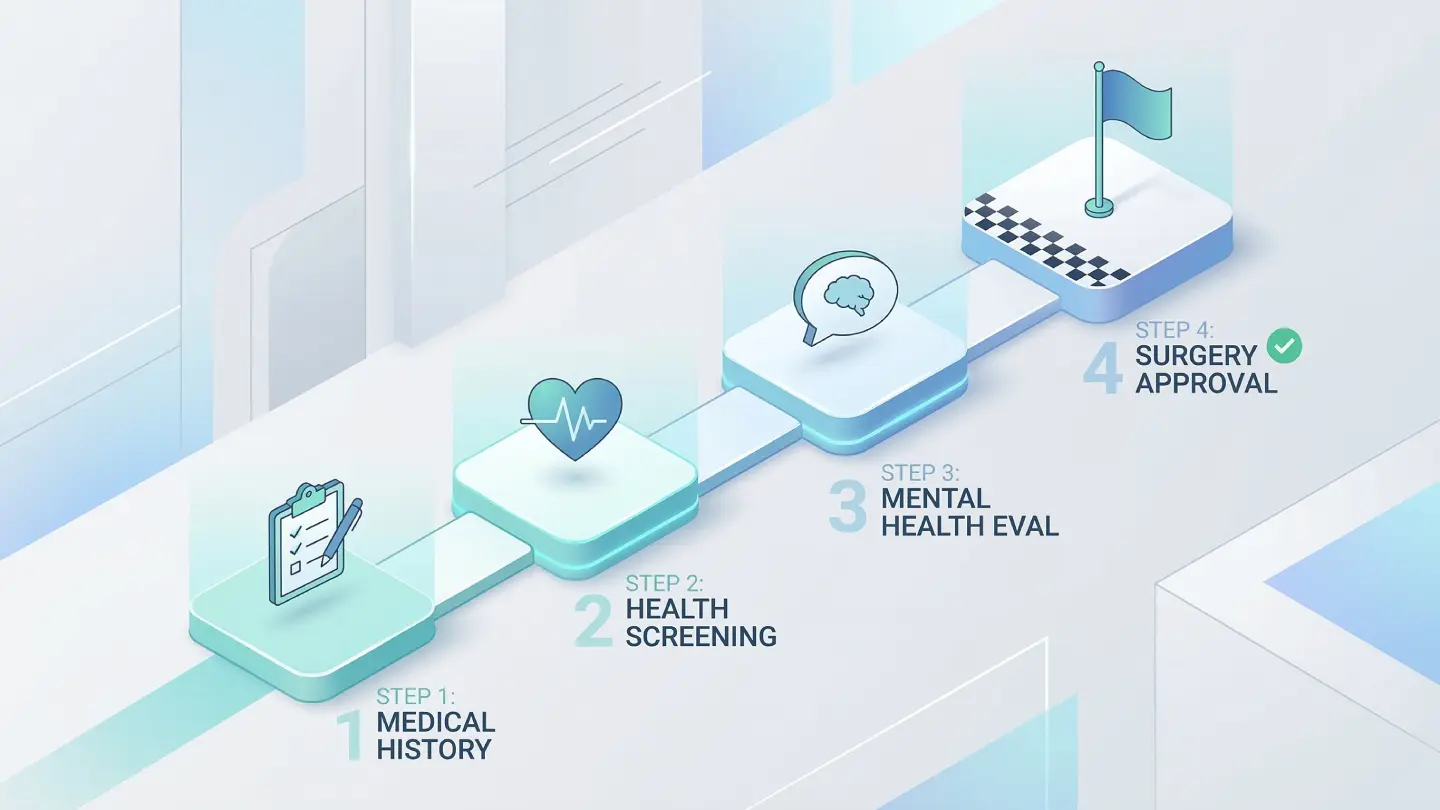
You might be a great candidate for TMS if you have tried two or more medications without success. You are also a strong candidate if the side effects of your current pills are ruining your quality of life. The National Center for Biotechnology Information provides numerous studies showing how effective TMS can be for treatment resistant patients. Our clinic carefully reviews your medical history to ensure this therapy is safe and appropriate for you. We want to ensure you do not chose alone and the best fit is found for your unique brain chemistry.
Breaking Down the Cost of TMS vs Antidepressants
Cost is a big factor when planning your care. It is important to look at both the short term and long term expenses.
Pills might seem cheap at first. A monthly refill might only cost a few dollars depending on your insurance. But when you add up years of copays frequent doctor visits and buying extra medicines to manage side effects the total climbs fast. Medication is an ongoing cost with no clear end date.
TMS is a larger investment upfront. The good news is that most major insurance plans and Medicare provide insurance coverage for NeuroStar when treating depression. Since it is a set course of treatment you have a clear end date. You complete your sessions and you are done. You are not paying for a lifetime of daily pills. In the long run many patients find TMS to be a very smart financial choice for their mental health.
Start Your Healing Journey in Decatur and Atlanta
You deserve a treatment plan that fits your life and helps you feel like yourself again. Dr Judith Ngulefac and our team at MindBodySoul Mental Health and Family Practice are here to help you navigate these choices. We provide compassionate care tailored to your unique needs. We believe in finding the root cause of your struggles and offering the most advanced treatments available.
We offer telehealth evaluations across Georgia to make starting easy. You can meet with us from the comfort of your own home to discuss your options. If TMS is the right fit for you we provide comfortable in person treatments at our clinic serving Decatur and Atlanta. You do not have to fight depression alone or settle for treatments that do not work. Contact us today to schedule your evaluation and take the first step toward a brighter tomorrow.
TMS vs Antidepressants FAQs
The main difference is how they target depression. Antidepressants are systemic medications that travel through your entire body, altering brain chemicals over time. TMS uses targeted magnetic pulses directed only at the mood-controlling areas of the brain, bypassing your digestive system entirely.
No. Because TMS does not travel through your bloodstream, it avoids common medication side effects like weight gain, upset stomach, and lowered sex drive. The most common side effect of TMS is mild scalp discomfort or a headache during the first few sessions.
Antidepressants typically take four to six weeks to show full results. Many patients undergoing TMS therapy begin to see noticeable improvements in their mood within the first few weeks of their treatment sessions.
While TMS requires a higher upfront investment, it is a targeted treatment with a clear end date. Antidepressants require ongoing prescription costs, frequent doctor visits, and copays that can add up over a lifetime. Furthermore, NeuroStar TMS is covered by most major insurance plans and Medicare.
Yes! MindBodySoul Mental Health & Family Practice provides comfortable, in-person NeuroStar TMS treatments at our clinic, which serves patients from both Decatur and Atlanta, GA.
Yes, Dr. Judith Ngulefac offers telehealth evaluations for patients anywhere in Georgia. This allows you to comfortably discuss your treatment options, including TMS vs antidepressants, from your home before coming in for treatment.