
Deciding to start therapy is a powerful step toward reclaiming your well-being, but the modern landscape of care presents a new logistical puzzle. You might wonder if logging onto a screen from your living room can truly replicate the depth and impact of sitting across from a clinician in a physical office. As clinical practices evolve to meet patients where they are, understanding how remote care stacks up against traditional face-to-face sessions becomes essential for your healing journey.
According to data published by the Centers for Disease Control and Prevention, emotional and psychological health forms the bedrock of overall human wellness. When chronic stress or clinical disorders disrupt your daily functioning, getting timely care matters far more than the delivery method. Decades of clinical research tracked through resources like the National Center for Biotechnology Information demonstrate that the therapeutic alliance—the trusting relationship built between you and your mental health provider—remains strong through a video connection.
Clinical Efficacy: What the Research Shows About Remote Sessions
Clinical trials tracked across repositories like PubMed consistently show that virtual psychotherapy matches the clinical outcomes of in-person treatment for common conditions like generalized anxiety, panic disorder, and mild-to-moderate depression. When you engage in cognitive behavioral therapy via a secure video feed, your brain processes the interventions through the exact same neuroplastic pathways as it would in a brick-and-mortar room. Evaluative metrics such as the PHQ-9 depression screening tool track identical symptom reductions regardless of whether the patient sits on a clinic couch or their own sofa. For a detailed breakdown of these scoring metrics, you can review our guide on PHQ-9 score meaning and severity ranges to understand how clinicians measure your baseline.
Institutions like the National Institute of Mental Health emphasize that the active ingredients of effective psychotherapy are empathy, structured cognitive reframing, and consistent execution. These elements do not require a physical room to succeed. Approximately 85 percent of clinical studies comparing modalities find no statistically significant difference in symptom reduction between remote and in-person psychotherapy for adult populations. When delivered by licensed practitioners who adhere to strict evidence-based standards, digital interventions provide the exact same structural frameworks utilized in traditional clinical settings.
Logistical Advantages of Virtual Care in Georgia
Removing the barrier of travel often dictates whether a patient maintains consistent attendance or drops out of care prematurely. Traveling across metro areas like Atlanta and Decatur introduces traffic stressors that can spike your cortisol levels right before you process heavy emotional trauma. Virtual sessions eliminate commute times entirely, allowing you to transition smoothly from your workday into your healing space without navigating interstate congestion. This accessibility drastically reduces missed appointments, keeping your treatment schedule stable and predictable.
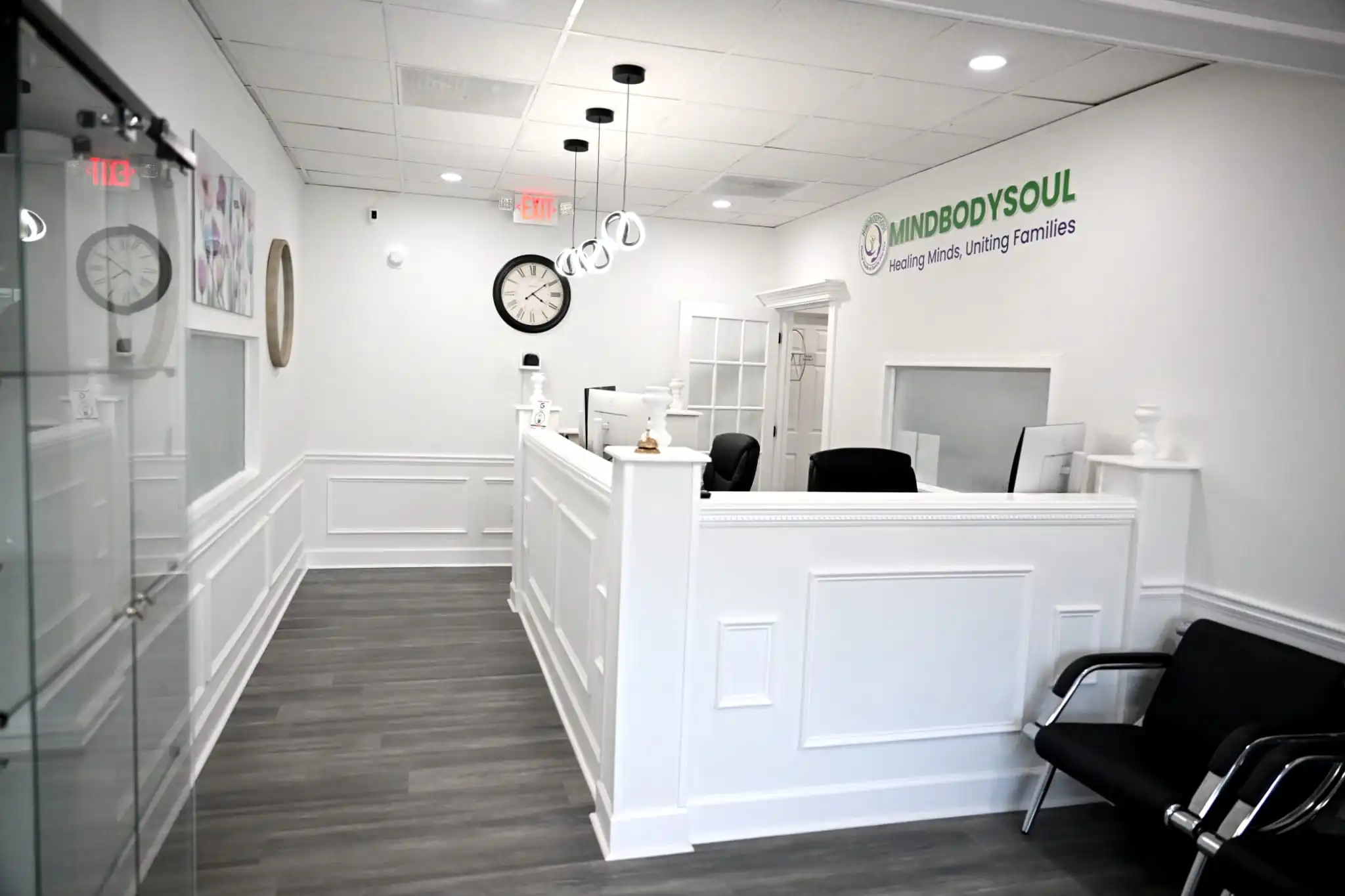
At MindBodySoul Mental Health & Family Practice, we support telehealth evaluations across the entire state of Georgia, ensuring that geographic isolation never stands between you and proper psychiatric care. For certain specialized treatments that require physical observation, such as advanced interventional protocols, we also provide in-person clinical care right here in Decatur and Atlanta, GA. If you are balancing a demanding career or caregiving responsibilities, remote appointments grant you the flexibility to prioritize your mental health without sacrificing hours of productivity. Consistency is a core pillar of psychological recovery, and virtual access removes the friction that typically derails long-term adherence.
When In-Person Treatment Remains the Gold Standard
While virtual care handles standard talk therapy exceptionally well, certain complex presentations demand a physical environment. Severe psychiatric crises, active substance withdrawal, or profound dissociative episodes require the safety net of an in-person clinical setting. When a patient presents with high acute risk—such as severe major depressive disorder with active suicidal ideation—navigating treatment safely often requires a multidisciplinary team equipped for immediate physical intervention. You can read more about dealing with complex depressive states in our article on navigating major depressive disorder and rediscovering joy to see how comprehensive treatment plans adapt to symptom severity.
Physical environments also offer subtle non-verbal cues that video feeds sometimes truncate. Micro-expressions, subtle shifts in posture, and spatial tension are easier for a clinician to read in real time within a controlled room. Furthermore, individuals whose home environments lack privacy or emotional safety often struggle to speak freely on a computer. If your household is chaotic or unsupportive, driving to a quiet, neutral office space provides the necessary psychological boundary to unpack difficult memories without fear of being overheard by family members or roommates.
Choosing Your Path Forward at MindBodySoul Mental Health
Selecting the right treatment format comes down to your personal clinical needs, your daily environment, and your comfort level with technology. If you value privacy, convenience, and a streamlined schedule, virtual therapy offers an empirically validated path toward emotional stability. Should your symptoms require specialized in-person interventions, our clinical team is ready to welcome you to our local practice. Take the next step by scheduling an initial consultation with our experienced team, including Dr. Judith Ngulefac, DNP, and Delores Bedell, MSN, APRN, PMHNP-BC, to determine which modality best fits your lifestyle.